Tuesday, January 29, 2008

The garden


Right outside my house is Bill's garden. When he isn't working at the hospital or working out, he is usually outside working in the garden. Like the mail, nothing stops him - not rain, or snow, or sleet or hail (okay, we don't get the last 3, but the rain surely doesn't stop him.) Thankfully, I am up in the mornings, so when he is out at 0600 with the rototiller, it doesn't bother me. He grows a lot of vegetables and supplies the missionaries and others on the station with produce. Thankfully for him, due to my likes and dislikes, this neighbor doesn't raid his garden too often. I am thankful that he grows cabbage and pineapple, but I also enjoy the lettuce, onions, and peppers. He also grows beans, peas, bananas, squash, zucchini, tomatoes, carrots, and more.

The other day I had to ask him a question and found him with dead beans in his hand. I commented on these beans looking rotten, only to learn that this was his source of seed that would be used to plant new beans. John 12:24 "I tell you the truth, unless a kernel of wheat falls to the ground and dies, it remains only a single seed. But if it dies, it produces many seeds." This led to Gardening 101 for Erin, and a sermon for him to share at the recent pastor's conference. Since I know very little about gardening, I was happy to learn. I learned about seed planting, compost, barrets, crop rotation, and knowing how to tell ripe vegetables. I paid special attention to how to grow more cabbage and pineapple for when he is gone on furlough.
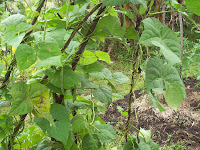
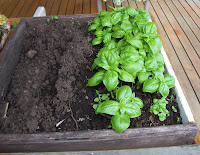

He has made little nursery boxes, and uses these to start the new plants as they grow from seed. Once they start to grow, they get replanted into the garden. I learned the secret of a good garden - compost. He has a compost pile in the garden, where a bunch of the missionaries throw away our pipia (rubbish). This then decomposes and turns into great soil for the nursery boxes and other areas of ground which need some nourishment.

One of the unique things about gardening in PNG is the amount of rain that falls. If your plants are ground level they will soon be drowning in water after one rain. So the PNGers dig barrets (ditches) which collect the rain water and divert it from the crops. This works, as does planting on mounds which are elevated above the ground. Crop rotation was also part of my lesson. I don't remember all the the plants that are nitrogen adders and depleters, nor do I know how he remembers what was planted where and when, but he does. This enables him to rotate the crops accordingly to keep the soil from being depleted of all it's resources. If it does get depleted, the compost helps to restore some of them.

Josh, your dad says "Hi," and would appreciate an email from you when you have a chance.

Monday, January 28, 2008

Power Outages

Power outages are not uncommon here on the station. Our primary power source is our hydroelectric plant. At times debris gets stuck inside, and the power goes out briefly, at other times it just doesn't work but I don't know why. Often when it goes out, it will kick back on within a minute. The missionaries joke that just as you are lighting the candles the power comes back on, this is often true, but we have the candles ready anyway. When our hydro plant doesn't work, we then use the government power - which is quite expensive, but it provides the power we need. The hospital has a back up generator which runs when the power doesn't to keep things going inside the hospital. One thing I have recently realized, is that I no longer notice when the lights go out at the hospital, it is just a normal occurrence, and we just keep working. At times Dr. Jim has operated by flashlight, but thankfully that didn't happen tonight during 2 CSs that I did with Dr. Bill. We had our headlights just in case.

On Sunday from about noon to just after 8:00pm, we didn't have any electricity. Above the new hospital work site are some power lines, which are being moved. A work crew came to move them on Sunday, so they shut off the power. Not knowing when the power might return, the McCoys started preparing just in case. I was reading and I heard this sound of what sounded like something on the roof. I didn't know what it was, but shortly afterward I hear a call of "Erin" from the McCoys. I am thankful I live by them, as I wouldn't have thought to get water from our water tanks to wash dishes, fill the tub, fill up the water filter, and the toilet. So we started a bucket brigade and brought water into our houses from the tanks which collect the rain water. Bill reminded me to get the camera as "You never know what people might want to read." So in case you have been wondering what we do here when we don't have power, I am writing this for you. If you weren't wondering, well you now know, thanks for reading.

The McCoys started a bible study on Sunday nights. Normally one brings a bible and a pen to bible study, but after our first study when the lights went out briefly, I learned that a headlight is also a necessity. So having no power and being in the dark didn't stop us from studying Luke 5 and 6 last night. We read by headlight and candlelight. The bible study has been a blessing, it has been great to get into the Word more and discuss the Word with other missionaries, as we grow closer to Him.

Sunday, January 27, 2008

The battle is the Lord's

Harmon Schmelzenbach, a Nazarene missionary serving in Fiji, preached at Emmanuel (church just outside the hospital) this am. Harmon, like other members of his family, has been blessed with the gift of preaching. He shared a story about his family and how God won the battle, and then talked about David and Goliath. It was a great reminder that in life we all will face battles, mountains, or burdens that are huge and seemingly impossible to overcome. We must know that the battle is the Lord's (1 Sam 17:47), and we can overcome it with His help. He reminded us that often the burdens we carry, are ones we have to carry alone with His help, and we can't rely on others to do it for us. Matt 11:28 "Come to me, all you who are weary and burdened, and I will give you rest." God will do the work and use us in it, just like God won the battle against Goliath, but used David and his slingshot to do it. 2 Cor 12:9 "My grace is sufficient for you, for my power is made perfect in weakness." It is good to know that God's grace is sufficient no matter what mountain we are climbing. In the light of the recent hospital situation, this was a good reminder that the battles we face here are not ours, but the Lord's and we need to continue to pray and trust Him, and be prepared to fight as He directs us.

Pidgin is a very word poor language, and today was one of the first times where this became very apparentt. Pastor Robert translated the message into Pidgin for the PNG folks. The main message definitely got across, but so many little words, or descriptive terms that really helped to make points, were lost. As Marsha and I talked after church, we wonder how much of what they tell us everyday we don't really understand exactly what they are saying. I know in the daily interactions in medicine I am missing a lot of what they are trying to say. Keep praying that I would keep learning Pidgin, to effectively communicate truths both in medicine and about the Lord.

Thursday, January 24, 2008

Hospital Reopens Again


Well the new hospital, which is being built by the donation from the PNG Incentive Fund (PNGIF), had another set back this week. Like the last time the hospital closed, the local tribes interfered with the progression of the project. A different lain wanted worked and did what they could to see that they got it. This did not go over so well with Dr. Bill and other hospital leaders, so the hospital closed again. (You can see the empty peds ward after 3 days of closure, and no one in the outpt waiting area.) The hospital leaders are just asking for assurance from the tribes that the work of the project will continue without interference, without locals continuing to demand work, and without the normal customs of the PNG culture - bribes and violence.

Many meetings had occurred this week, and it didn't look like we were getting anywhere. The locals didn't think the hospital should be closed because things didn't go well on the new site - they don't connect the two. They talk about wanting this hospital so that their kids and grandkids will be able to get care, but don't seem to understand every time they interfere with the project they are coming closer and closer to not ever seeing this hospital being finished. There are lots of folks that could pull out - Heduru (the construction team), PNGIF (the donors), and the Nazarene Church. If any of these folks said this is enough, too many disturbances to the project - then no hospital will be built.

Today, through answered prayer, the folks at fault backed down, accepted responsibility, and claim they won't interfere again. This is a huge victory - for today. Unfortunately, this probably won't be the last time the hospital closes as the new hospital is being built. These 2 incidents that have occured, to them seem like nothing. It is business as normal, just their way of life. It will take a while before they understand that we don't operate that way, and they shouldn't either. I would ask that you would continue to pray for the building of the new hospital, that the hearts of the local tribes would change, and for wisdom for our leaders here.

I was reminded last night of God's promises as I looked out my window and saw this rainbow. As God said to Noah in Gen 9:16 "Whenever the rainbow appears in the clouds, I will see it and remember the everlasting covenant between God and all living creatures of every kind on the earth." Last night, this was a reminder to me that He does remember His people, and that His promises still stand, and that He will continue to carry out His work through His people today. What a joy it is to be a part of His work.

Tuesday, January 22, 2008

Basketball


One of my favorite things to do here at Kudjip is to get together with the other missionaries and play basketball. Due to work, we usually play on the weekends in between the rain storms. We try and get as many players as we can, and often have enough for 2-2, 2-3, or 3-3, but at times we go 1-1-1. One of the first questions we ask the new volunteers is if they play basketball or not. We currently have quite a few players - Jim, Bill, Jeff, Scot, Kristen (new school teacher), Kevin (vol FP resident), Mike (new hospital project director, has some bad knees, but we will get him to join us), and myself. Thankfully a number of us are doctors, so if someone gets injured, like when Bill dislocated his thumb, we can quickly attend to them. This is especially encouraging to me knowing my shoulder could come out again. We recently put on a new backboard on the hoop where we play when Tim Radcliffe was home over Christmas. There is also a hoop at the old Ward House, where I often go to shoot when we don't have a game going. At times, Bill, Jim, or Mike has joined me and then we have played 1-1 in the grass - which is somewhat challenging, but fun. If anyone is coming to visit - you will have to try and figure out how to stop Jeff's running hook shot. It doesn't look pretty, but more often than not it goes in and we haven't been able to stop it yet.

Sunday, January 20, 2008

HIV stuff

I have been busy working on HIV stuff since Dr. Scott Dooley is home on furlough. This has been a good learning experience for me. I have learned a lot about HIV, how to work with others, and am gaining an understanding of how government programs are run. Our hospital is working on becoming a site that gives antiretroviral medicines to patients who qualify for treatment. All our pts are currently going to the Hagen clinic, but after we finish the government requirements, we will soon be supplying our own meds. I recently had a meeting with some folks from Hagen about HIV stuff. It was interesting because I haven't completed any of the training, and am not familiar with all the lingo that they use, but I tried not to let this show. I have read the materials that Dr. Scott left for me, so I do know something about HIV care itself. I was thinking I shouldn't be in this meeting by myself, someone should be here so I don't say something I shouldn't, but it went alright. I tried to encourage them that we are ready to start giving out ARTs, but they said we still have to wait until our HIV person here, Sister Judy, completes her training.

I have been working with Sister Judy to continue to develop our program. We are working on getting the required labs so we can follow their blood counts, determining if they have TB or not, and determining what drug regimen we plan to give them. I have worked on revising our protocol for our Labor Ward in order to try and prevent the transmission of HIV to babies. We currently have meds that we can use to treat the newborns right after birth, and, shortly, will be getting more meds to be able to treat both mom and babies for longer periods of time. We are working on getting our Labor Ward nurses trained in counseling and performing the blood test, so we are able to test everyone when they come in to deliver. The HIV population in PNG is growing, so this will become a big part of what we do here in the years to come.

Wednesday, January 16, 2008

Container arrived - Pharmacy stuff

This weekend we got a container from the US. A few times a year the hospital receives a container full of hospital supplies - most of it is donated from companies and hospitals in the US that churches and others put together. The missionaries also have some personal things which come. Some are surprises from family or churches, so at times it is like Christmas. I got somethings I had asked Megan to send - like contact solution, a few books, sunscreen, etc - but a few surprises also which was fun. I got a new lamp in my den now because Marsha McCoy had gotten lamps for the mission houses, so I inherited one of these. I also should be getting some new curtains for my living room in a few days.

After a container comes, the hospital pharmacy quickly fills up. Our faithful pharmacy workers get the job of sorting through everything and finding it's place on the shelves. This will definitely take a few days. Other than donations, we also get hospital supplies and medicines from the Papua New Guinea Area Medical Stores and from other stores where we purchase meds from. Since Scott Dooley is on furlough, I have now inherited the job of ordering medicines for pharmacy, which at times can be frustrating. I often don't know we are out of something, until we are already out of it. The AMS often doesn't have all the meds that they should, and it takes longer to fill an order than I would think it should. We often send urgent orders for things and come back with less than half of what we ordered about 1 week later. Poor phone lines also make this job harder, as often I can't make a call. We currently are out of 3 of our 5 medicines for Tuberculosis, and no one in the country seems to have these medicines. Just a normal day here at Kudjip. Despite all this we continue, by God's grace, to care for the folks the best we can with the resources we have.

Sunday, January 13, 2008

Women in PNG

I just read a book called Toropo: Tenth Wife. This book was written by a lady who lived in PNG as a teenager while her parents were missionaries. She took a collection of true stories and made them into one fictional story. In the story, Toropo 14yo, has been come to undestand that her whole purpose as a young women is to do things that will get a higher bride price for her family. Her dad is the chief, and has 2 wives. As the chief, his job is to improve the lain (everyone in his tribe), so he wants to get the biggest bride price he can for each of the women who are to be married. Toropo falls in love with a young man who is a teacher. Before he talks to her father about the bride price, an old man - older than her father, has already talked to him and they have agreed on a bride price. He also says he will give 5 more pigs than anyone else offers, so Toropo has no hope of marrying someone she would love. Her dad doesn't care that Toropo loves this guy, or that she is going to someone older than him, all he cares about is improving the lain at whatever expense.

Toropo soon finds out that her husband to be, Kedle, has 9 other wives and she is to be the tenth. As with any polygamous relationship, there is a lot of anger, resentment, and jealousy amongst the wives. Some are Christians and are helpful to Toropo, but others just hate her. She finds herself hating her husband also, who is spending all his time with her and not the others. One night, some of the wives come in to try and kill her and her husband. They are unsuccessful, but did manage to burn her. She uses this as an excuse to go home to visit her parents. While there she asks about the possibility of her returning home. There is no possibility. If a women runs away from her husband, the husband comes back to her family and demands the bride price back. No one has this to give back - they have already spent it, so returning home isn't an option. In fact, in Toropo's lain 2 women had recently returned and they were making them go back because they couldn't pay back the bride price. Toropo did try to run away (not to her family), but Kedle tracked her down, and beat her with a club when he brought her back - sounds like a loving relationship.

She ends up getting close to a 10yo girl of another wife, and they become like sisters. This girl goes to school, something Toropo had always wanted, and she helps Toropo learn English and Pidgin. One day the girl is upset. Toropo finds out that this 10yo girl has been promised to a man and the bride price has already been settled and she will leave in a week. She is only 10yo. Toropo decides she needs to try and fight for this girl, so she goes to talk to Kedle. She tries to explain it is unfair to this girl, but he only thinks of his agenda - which is to make an alliance with this man, and doesn't care about this girl - one of his daughters. Toropo gets pregnant, and thinks she is having a girl. She decides she doesn't want to have her daughter, who she has already grown to love, be sold at 10yo to someone, so she strongly considers suicide. She doesn't go through with it, hoping that maybe there will be a different light, a new hope that will come into her life and help to save her and her unborn baby.

Although this book was based on stories that happened shortly after PNG independence in 1975, a lot of these things still occur today. I have seen a lot of this already. Polygammy still occurs, I recently cared for a lady whose husband had 7 other wives. Almost everyday there are patients who come to the hospital as a result of domestic violence, most of which stems from disputes amongst wives or as a result of having multiple wives. We care for patients who have been burned, or chopped as a result of this violence. I have also cared for women who have attempted suicide whether by hanging or ingestion. They never really tell me why they did it, but it usually has been as a result of a fight with their husbands.
As I read this book, I was heart broken for the women in PNG. I know there are other countries with similar problems, but for now this hits home because I am amongst these folks everyday. It opened my eyes and gave me a better understanding of what life is like for them. Even at church yesterday (bush church at Tuning) I was reminded of how women are thought of. It isn't uncommon to have women sit on one side of the church and men on the other (still not sure why), but at Tuning there were benches for the guys to sit on, but the women were expected to sit on the ground. I am thankful that in Christ we are all free and equal. Gal 3:26-29" You are all sons of God through faith in Christ Jesus, for all of you who were baptized into Christ have clothed yourselves with Christ. There is neither Jew nor Greek, slave nor free, male nor female, for you are all one in Christ Jesus. If you belong to Christ, then you are Abraham's seed and heirs according to the promise." I am thankful I grew up in America, where women are considered equals. I am thankful for the respect and love that Christian brothers have shown and continue to show me. I pray that PNG will soon come to respect women also.

Saturday, January 12, 2008

First Bike Ride

Friday after work, Bill and I went on my first bike ride. We went on the dirt, rock, and mud path behind our houses. There were quite a few mud puddles. Some we walked our bikes through while others we rode through, so the bike and I got pretty muddy, but it was fun. We rode up and down hills through the different villages, greeting people as we rode. The villagers would stop walking or gardening and watch us and say "Apinun." Some kids would scream and start to run behind us, following us.

At one point, we stopped at a place where lots of villagers were gathered, the kids kept reaching out wanting to touch Bill - a white skin. As we were standing there I saw a log across the river spanning the 2 banks, I asked if they used it as a bridge. Just then a kid of about 3yo came running down the hill and casually walked across this 8 ft long, maybe 1 ft wide tree trunk, that was about 5 feet from the river. No parents around, no one to hold his hand, no one to catch him in case he fell into the river below as he walked across. So that quickly answered my question, but I don't know that I would have wanted to walk across it.

At another point near Tumba church we found some kids enjoying the mud. They were sliding down the mud hill on some sort of plastic, or cardboard which they sat on and then went down this hill. They were covered in mud but were having fun. It reminded me of the movie "It's a Wonderful Life" when in the beginning the kids are sliding down the snow on the shovels.


Taking the ride sure gave me a better appreciation for the villagers and what it is like for them. They have no running water, no electricity, no toilets. They go to the river to bathe and get water for cooking. They cook the food which they grow in their gardens - kaukau, beans, corn, and peanuts. At one pt, there were people along the side of the road selling some peanuts and a few other things. I wondered who would be buying that, but apparently someone does. It sure makes me thankful for what God has given me.

Friday, January 11, 2008

Circle Time

Circle time is where all the missionaries gather at the circle to say goodbye to the folks who are leaving. This is done for those who have come to give their time to the hospital or to this station. Usually it is done at 0800 before the work and school day starts. Everyone gathers outside the hospital at the circle, outside the Radcliffe home. While folks are gathering people start to say goodbye to the folks leaving. Once everyone is assembled, we join hands in a circle and pray for those leaving. More goodbyes and hugs follow, then we wave goodbye as the vehicle leaves. The kids usually run and gather flowers and run ahead and throw flowers at the vehicle as it is driving away.
Today we said goodbye to Dan, Christina, and Caleb Benedick, who were with us for a month. Dan, a 2nd yr FP resident, is interested in doing missions when done with residency. Christina is a teacher and Caleb's (15months) mom.

Wednesday, January 9, 2008

Trip to Town

Today was the monthly "teacher shopping day," which means I also got to go shopping. I got up and rounded before we left and then packed myself into the Land Cruiser with the others - Mike and Diane Chapman, Kathy Radcliffe, Joy Johnson, Mimi Kim, and myself. We had a list of things to get done and thankfully did them all and still got home at 4:45, in time to play basketball. I wish I had taken a picture of the Land Cruiser when we got home as we had the bike and a bunch of coolers tied to the roof, and the back was full of our groceries. I didn't know if we were all going to make it, but thankfully we saved places for us to sit.

Some of our stops included the grocery store, bank, market, christian bookstore, digicel store (cell phone), lunch at the Highlander, and other various shops. I got a PNG drivers license today - I don't actually have a photo ID, because they are out of toner, but I have my paperwork. All you need is 60 Kina and a US license and they will give you a license. I guess they don't really care that I haven't drive on the L side of the road or with a standard much. Thankfully I won't be driving much, but it is nice to have if needed. I also got a few PNG original crafts in town today. I got the pottery at the Christian Bookstore, they have a variety of pieces from candlestick holders to bowls, to tea pots and cups, but I went with a few bowls. I also got the serving tray, the baskets can be found outside of BestBuy (grocery store). If you wait long enough they will come down on the price, but if you like something, you may just have to buy it.

I purchased a bike today. I had been thinking about asking one of the other missionaries to borrow theirs so I could do some regular exercise - but it didn't seem too practical. We happened to go into a new store today, and they had a bunch of bikes. I don't know much about bikes, but I knew the prices weren't bad. They had a few which required foot brakes, and foot gear changing - I didn't like that idea, so I went with the one shown. It was only 230 Kina which is like $87. I was worried it wouldn't be any good and fall apart given the price, but Mike assured me it should last me for my time here. So I now have transportation from one end of the station to the other and hope to use it regularly for exercising. I will have to stay on the station when I go by myself, but if others are going out for a ride on the road, I will try and tag along. For those who gave me money for Christmas or my Birthday - thanks I put it to good use.